Guide
What 1,000 Feet of Doorbell Range Means Inside a House
The number on the box is true. It is also measured across an empty field.
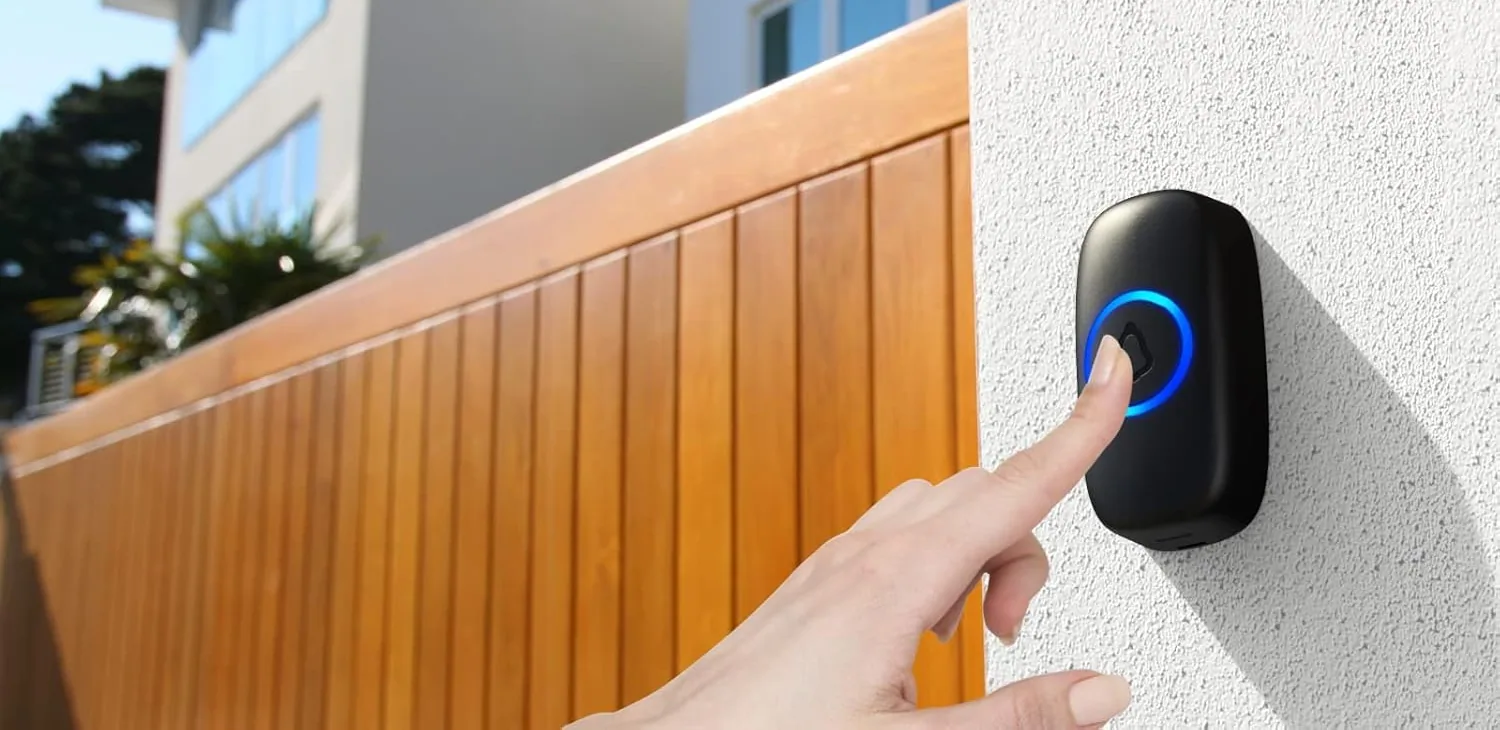
Where does the 1,000-foot figure come from?
It is the distance at which an M520 button still rings its chime with nothing in between: no walls, no door, no parked car.
Every wireless doorbell is sold on the same kind of figure, and none of them means your hallway.
The number is still useful, because it lets you compare one kit with another. A 1,000-foot button has more to spare than a 500-foot sensor, indoors as well as out.
| Model | Rings when | Open-air range | Receivers per kit |
|---|---|---|---|
| M520 Wireless Doorbell | Button is pressed | 1,000 ft | 1 |
| M520 Doorbell Kit with 2 or 3 Receivers | Button is pressed | 1,000 ft | 2, 3 |
| Capsule Wireless Doorbell | Button is pressed | 1,000 ft | 1, 2 |
| Flat Panel Wireless Doorbell | Button is pressed | 1,000 ft | 1, 2 |
| M520 Wireless Doorbell in Rose Red or Green | Button is pressed | 1,000 ft | 1 |
| Capsule Door Open Chime | Door opens | 500 ft | 1, 2 |
| Flat Panel Door Open Chime | Door opens | 500 ft | 1, 2 |
| Motion Sensor Chime | Motion within 26 ft | 500 ft | 1, 2 |
What takes the range away?
Mass and metal take it away, so an M520 button behind a steel door loses far more than one behind plasterboard.
A plasterboard wall on timber studs costs little. A brick wall costs more, and a concrete wall with steel in it costs most. Foil-backed insulation and a metal garage door act as shields too.
Other radios matter less than people fear, with one exception that buyers have told us about: a receiver plugged in right beside a Wi-Fi router can be slow to ring. Move it to another outlet.
-
Complete kit
SECRUI M520 Doorbell Kit with 2 or 3 Receivers
The M520 with a chime for each floor: two or three plug-in receivers ring together from one or two buttons.
from $22.99
Ring It Up on Amazon -
Complete kit
SECRUI Capsule Wireless Doorbell
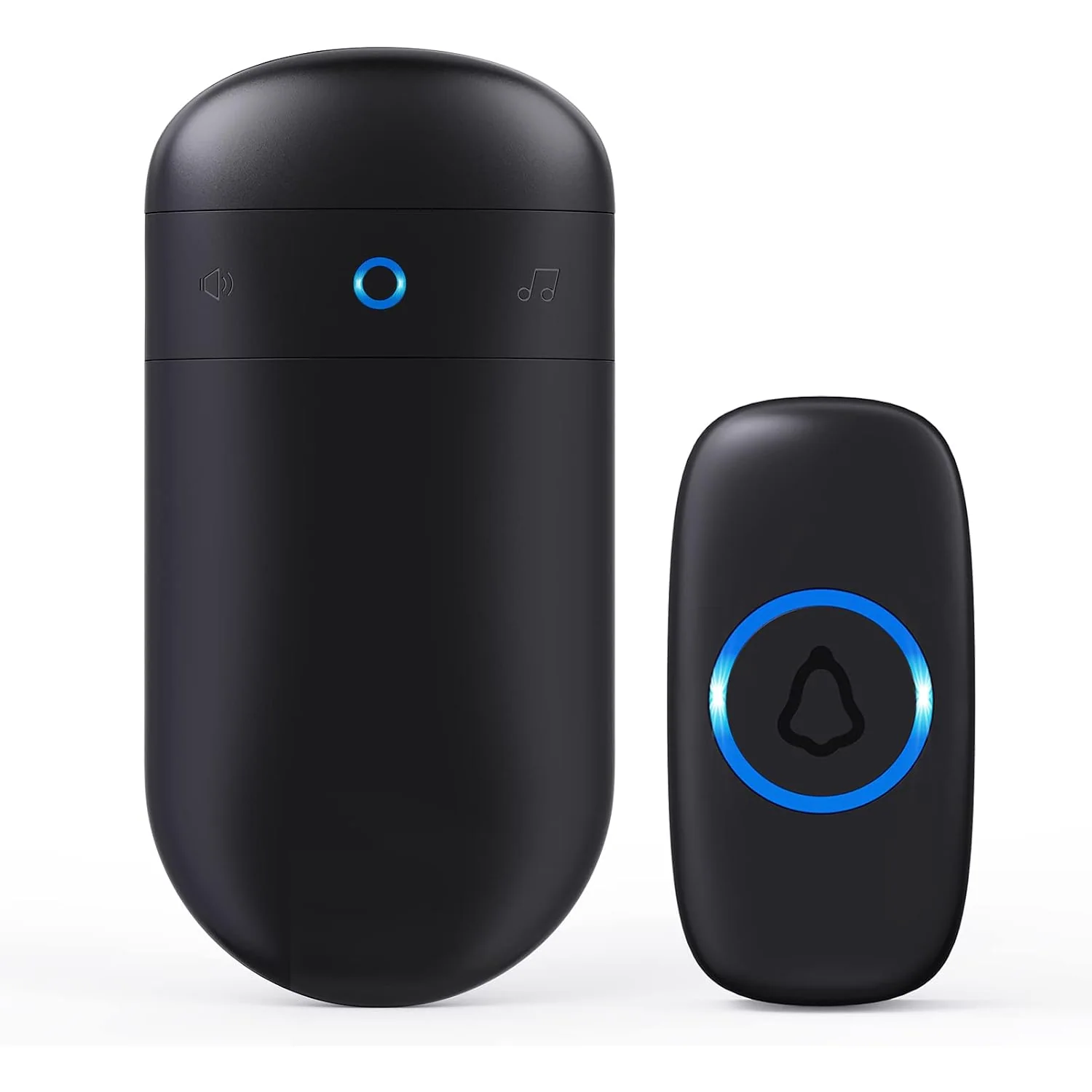
A tall, narrow chime that leaves the second outlet free, sold in four kit sizes.
from $16.99
Ring It Up on Amazon
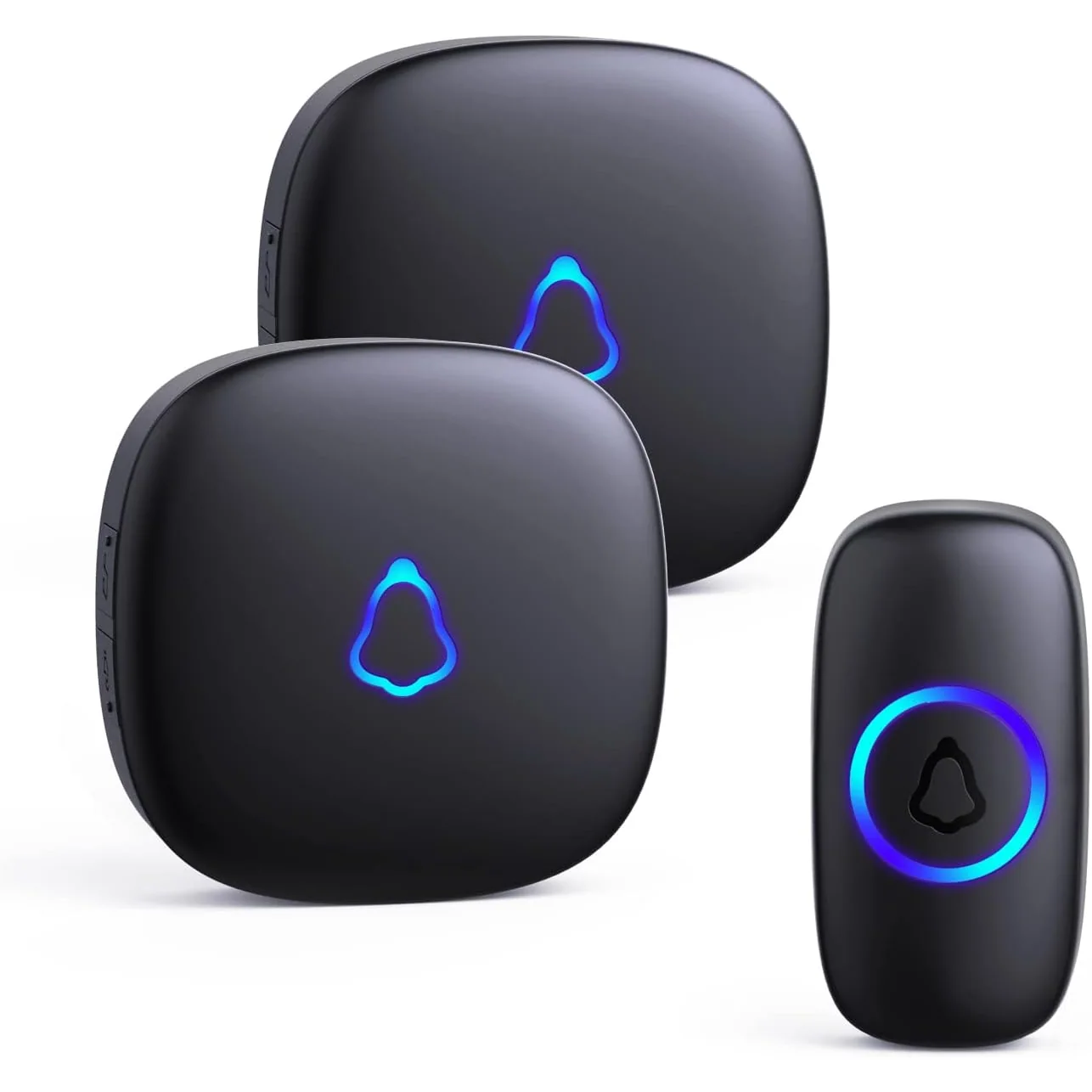
How do you place a receiver?
Start with the M520 receiver in the room nearest the door, press the button from its final position, and move the receiver 1 room further at a time.
The last room where it rings every time is your limit for that wall layout.
If the room you care about is past the limit, do not shout louder. Add a receiver. Two chimes at half the distance beat one at full volume.
When is a wireless doorbell the wrong tool?
When the button and the M520 chime sit in different buildings, with masonry and several hundred feet of ground between them.
A long driveway gate is the usual case. Driveway alarms with larger antennas exist for that job, and we do not make one.